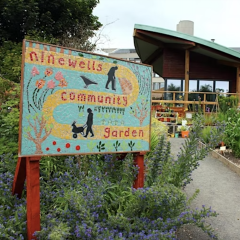
At the start of March I took a taxi to a hidden Eden in Ninewells Hospital, on the west side ofDundee, The Ninewells Community Garden. Walking through the garden I spotted areas of wilderness, tidy allotments, goldfinches, sparrows and great tits, and large mature trees.
There, amongst the borders and the shrubs stood a shed with large, double-glazed windows keeping the heat from the log-burning stove inside. I had come to deliver a workshop to a small group of participants: Jek, the custodian of the garden, and nurses, educators and
support workers from a variety of different charities and organisations.
The gardens don’t just exist to look pretty. They are there to provide a space of work,
community and relaxation to people in recovery. The participants of the workshop that day were the links to individuals recovering from addiction who could benefit from the garden andthe peace that it provides.
We had all met to discuss what resources we could draw together to make that experience as good as possible in a structured project. For my part, I was tasked with delivering an art workshop, a sort of taster of what creative activities could be on offer for individuals making use of this project. The idea being that patients in recovery may benefit from creatively expressing their interactions with the garden, and with the wider
natural world, reestablishing a connection with the earth, the plants, the animals who live in the garden.
The schedule for the morning’s meeting was packed, meaning that the workshop needed to be fun, accessible and playful, not laborious and involved. I asked the participants to pay particular attention to the sky whilst they went to explore the grounds, looking at the bare trees against the sky.
When they returned, I demonstrated how chalk pastels could be used on slightly-rough
pastel paper to draw scenes of skies filled with rolling billowing clouds, or gentle sunsets. We talked about how we could achieve effective results using only two or three colours and using our hands to blend the pastels together in a variety of movements.
Once the participants had finished their first drawings, I demonstrated how hairspray can be used to fix your drawing in place, so the chalk doesn’t rub away latter. We then explored different papers, the variations of colour and texture leading to different artistic outputs.
The hour sped by, with dozens of drawings created, and conversations flowing in the way that is only really possible when people are engaging creatively and playfully. The benefit of drawing something like clouds is that they can take any shape, form or colour, and they can be drawn with great detail, or tending towards abstraction. There’s no way to get it wrong. At the end of the workshop, I asked the participants which papers they had preferred. Pastel paper, like most art materials, can range from the cheap and accessible to the prohibitively expensive. Most of the participants actually preferred the cheaper paper.
Thank you so much to Jek and the workshop participants for welcoming me into the
Ninewells Community Garden.